When you search for a new vacuum cleaner, noise level is often a key factor — especially if you live in an apartment, have pets, or simply want to vacuum without disturbing others. In this article, we examine the sound levels of two of the most popular models from Miele — the classic canister vacuums and — and compare them with general vacuum noise norms. We also explain what those decibel (dB) figures truly mean in everyday use.
Most household vacuums operate between 60 and 80 dB.
For reference: normal conversation is about 60 dB, a busy restaurant or shower ~ 70–75 dB, traffic in a car ~ 75–80 dB.
Sounds above ~ 85 dB — common in shop vacs or old uprights — start to feel very loud and may be unpleasant for people or pets.
Vacuum noise is not just about loudness — the sound quality (tone, vibration, resonance) matters a lot. Premium canisters aim to reduce vibration and dampen motor noise, making them feel quieter than raw dB numbers suggest.
🔇 Miele C1 & C3: Measured sound levels
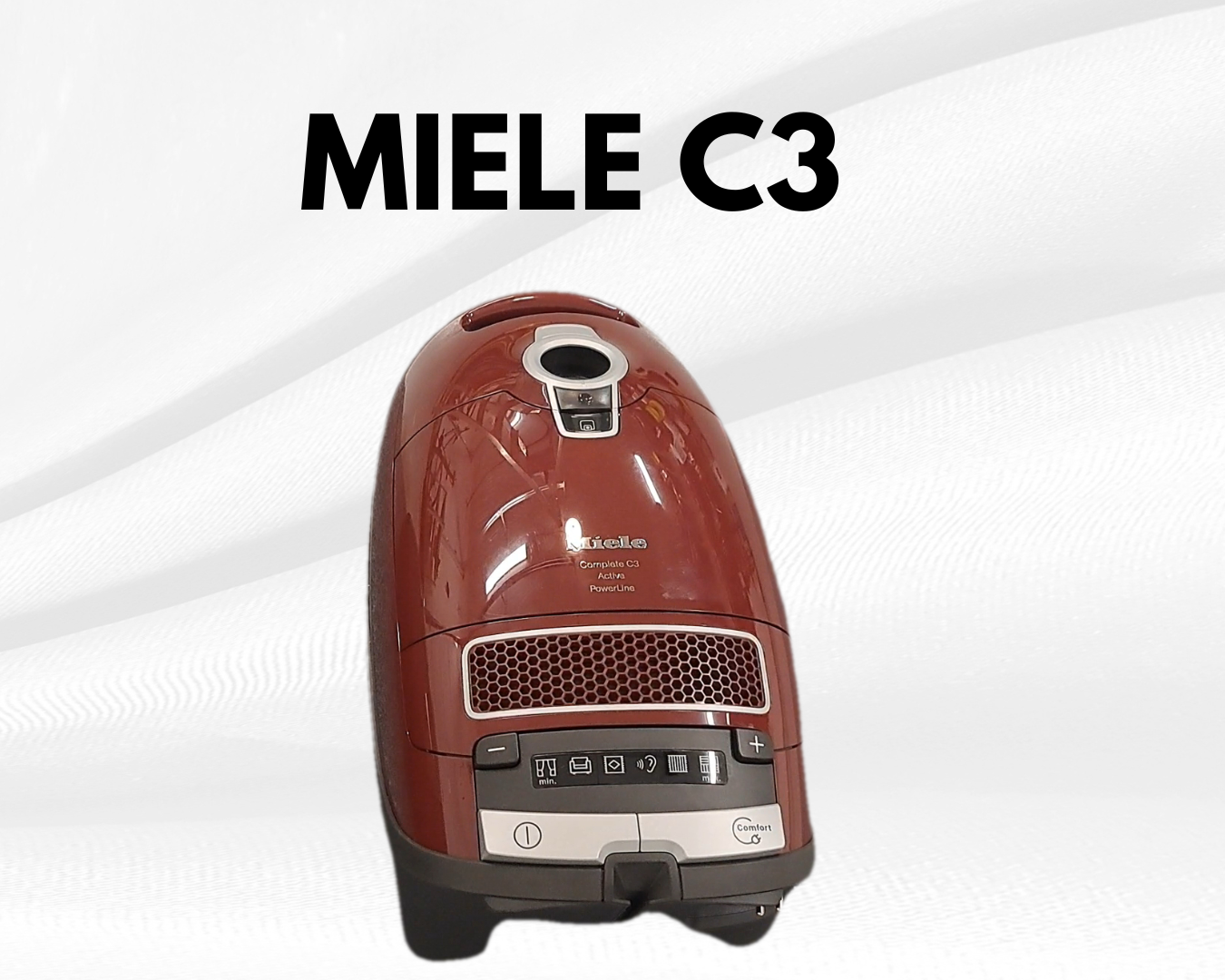
Miele Complete C3
On lowest suction: ≈ 56 dB — similar to a quiet conversation or background music.
On maximum suction (with brush/roll): ~67–68.5 dB — comparable to TV volume or normal living-room noise level.
According to official specs, the C3 “sound power level” is rated at 64 dB(A).
Miele C1
Miele C1 falls in a similar “quiet canister” class: typical owner-reported range is ~57–68 dB.
That puts it well below many upright or bagless vacuums, especially older/more budget-oriented models.
💡 In practice: Both C1 and C3 are among the quieter vacuums you’ll find. Their noise fits comfortably in normal indoor levels — not far louder than a moderate conversation or TV.
🏠 Why are canister vacuums like Miele quieter than many uprights or stick vacuums?
Enclosed motor housing: The motor is inside a sealed canister which isolates noise and reduces vibration. Uprights often have the motor near the floor and directly behind the suction head, causing louder airflow and mechanical noise.
Better build quality: Premium models use acoustic padding, rubber seals, and smoother airflow paths to avoid turbulence noise.
Lower RPM & steadier motor speed: Many canister vacuums sacrifice some peak suction for steadier performance and a more comfortable noise profile.
As a result, a well-designed canister vacuum like Miele can deliver powerful suction without sounding like a leaf blower.
✅ What does this mean — real-life verdict
If you value quietness, live in an apartment, have a pet, or simply dislike loud machines — Miele C1 or C3 are excellent choices.
With 56–68 dB operation, you can vacuum without disturbing conversations, naps, or TV at normal volume.
They outperform many uprights or cordless stick vacuums in terms of silent operation — especially when using low or medium suction.
Even at high suction, noise is comparable to everyday household sounds — not industrial-vacuum loud.
🧼 Tips to keep noise low when vacuuming
Use lower suction settings — for carpets or hard floors, full power often isn’t needed.
Maintain the vacuum — clean filters, replace dust bags & check seals to avoid extra motor strain and noise.
Avoid turbo-brushes on hardwood — rotating brushes add mechanical noise; use suction-only heads where possible.
Vacuum when neighbors/pets are out — even “quiet” vacuums may annoy if the timing or acoustics are bad.
🎯 Conclusion
For anyone who values quietness, comfort, and performance, Miele C1 and C3 are among the best household vacuums — and excellent choices when noise matters. Their decibel levels are in the comfortable range for indoor use, and the enclosed motor design helps reduce vibrations and harsh airflow noise typical of uprights.
If you want a powerful, durable and comparatively silent vacuum, Miele’s classic canisters remain hard to beat.


Leave a Reply